Agriculture
& Rural
Development

The Basti plain — its soil, its rivers, its crops and its village workshops — and the questions that decide whether a rural district grows or empties out.

Land as vocation

Agriculturist is an
occupation, not a label

On the public record, Harish Dwivedi’s occupation is entered as agriculturist. In a district like Basti that is a description of daily life rather than a designation. It means the cropping calendar organises the year; that the price of diesel, the arrival of the monsoon and the timing of a procurement payment are not policy variables but household ones; and that the difference between a good year and a bad one is decided by things nobody in a capital city ever sees.

That grounding shapes how this website treats agriculture. It does not present farming as a sentimental backdrop to a political career, and it does not claim credit for national schemes. What it does is set out, honestly and in detail, the physical and economic realities of one agricultural district — because rural policy that is not built on those specifics tends to fail in exactly the same way everywhere.

Everything factual on this page — the area, the population, the rivers, the crops, the industries — comes from published district records. Nothing here is an estimate, and no project or statistic is attributed to any individual.

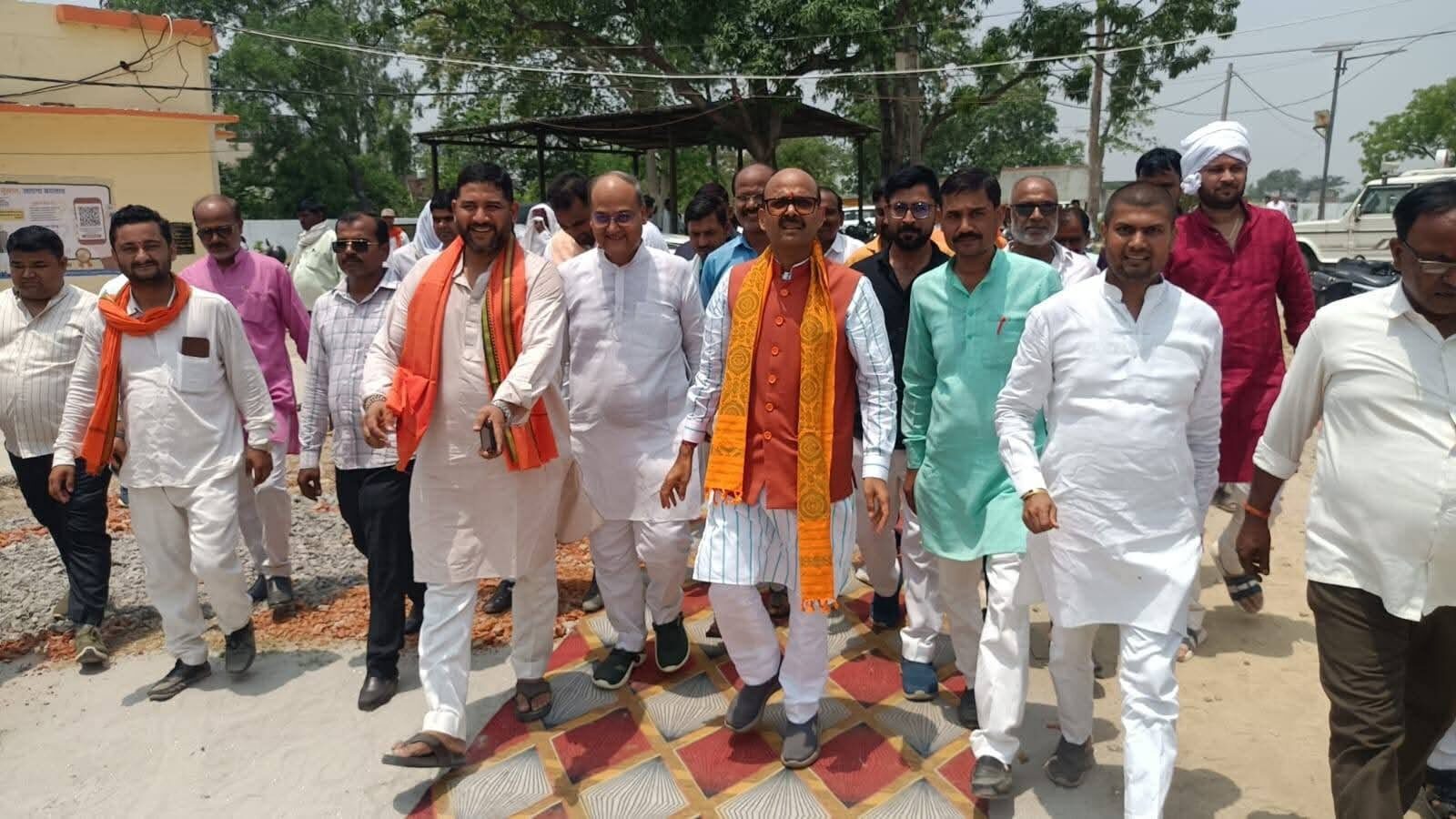
Harish Dwivedi walking through a village with farmers and local residents in the Basti countryside
A village visit in the Basti countryside. Constituency work in an agricultural district happens on the ground, in the cropping season, among the people affected by it.

The district in figures

The Basti plain

A stratified reading of one district — the physical geography first, then the human pressure on it, then what is grown and made. This is context, not a claim: these are the conditions in which any rural agenda for Basti has to work.

Extent
2,688 km² — roughly 75 kilometres north to south and 70 kilometres east to west, lying between 26°23′ and 27°30′ north and 82°17′ and 83°20′ east.
Population
2,464,464 at the 2011 Census, at a density of 917 people per square kilometre — high enough that land holdings are necessarily small and fragment further with each generation.
Administration
4 tehsils, 14 blocks — Basti Sadar, Harraiya, Bhanpur and Rudhauli, with fourteen development blocks below them. The parliamentary constituency covers five assembly segments: Harraiya, Kaptanganj, Rudhauli, Basti Sadar and Mahadewa.
Rivers
The Ghaghara forms the district’s southern boundary, separating it from Ayodhya and Ambedkar Nagar. The West Rapti and the Jamuwar are part of the wider river system of the region.
Literacy
67.22% at the 2011 Census, with a sex ratio of 963 women to every 1,000 men — the two social indicators most closely tied to long-term agricultural productivity.
Tree cover
Mango, mahua, sal, bamboo — along with eucalyptus and shisham. Forest area has declined over generations as cultivation expanded, which is itself a statement about land pressure.
Development status
Backward Regions Grant Fund — in 2006 Basti was identified among the districts eligible for support under the programme. A statement of starting conditions rather than of capacity.

Sources: Census of India 2011 and published district records. Figures are reproduced without adjustment.

What the district grows

Seven crops, two seasons

Basti’s cropping pattern is recorded as sugarcane, maize, paddy, pulses, wheat, barley and potato. Four sugar factories operate in the district. The mix matters: a cane-and-paddy district has different water, credit and payment-cycle problems from a pulses district, and needs different remedies.

Sugarcane Four sugar factories
Paddy Kharif season
Wheat Rabi season
Maize Grain & fodder
Pulses Protein & soil nitrogen
Barley Rabi season
Potato Needs cold storage

Why the mix matters. Sugarcane ties a household’s income to the payment cycle of a mill rather than to a market; potato ties it to the availability of cold storage; paddy and wheat tie it to procurement and to water. Each of those is a different failure point, and each needs a different intervention.

Pulses deserve particular attention. They fix nitrogen, need less water than cereals, and command better prices per quintal — but they are riskier to grow and harder to sell without an assured buyer. Making pulses a safe choice for a smallholder is one of the most efficient rural interventions available.

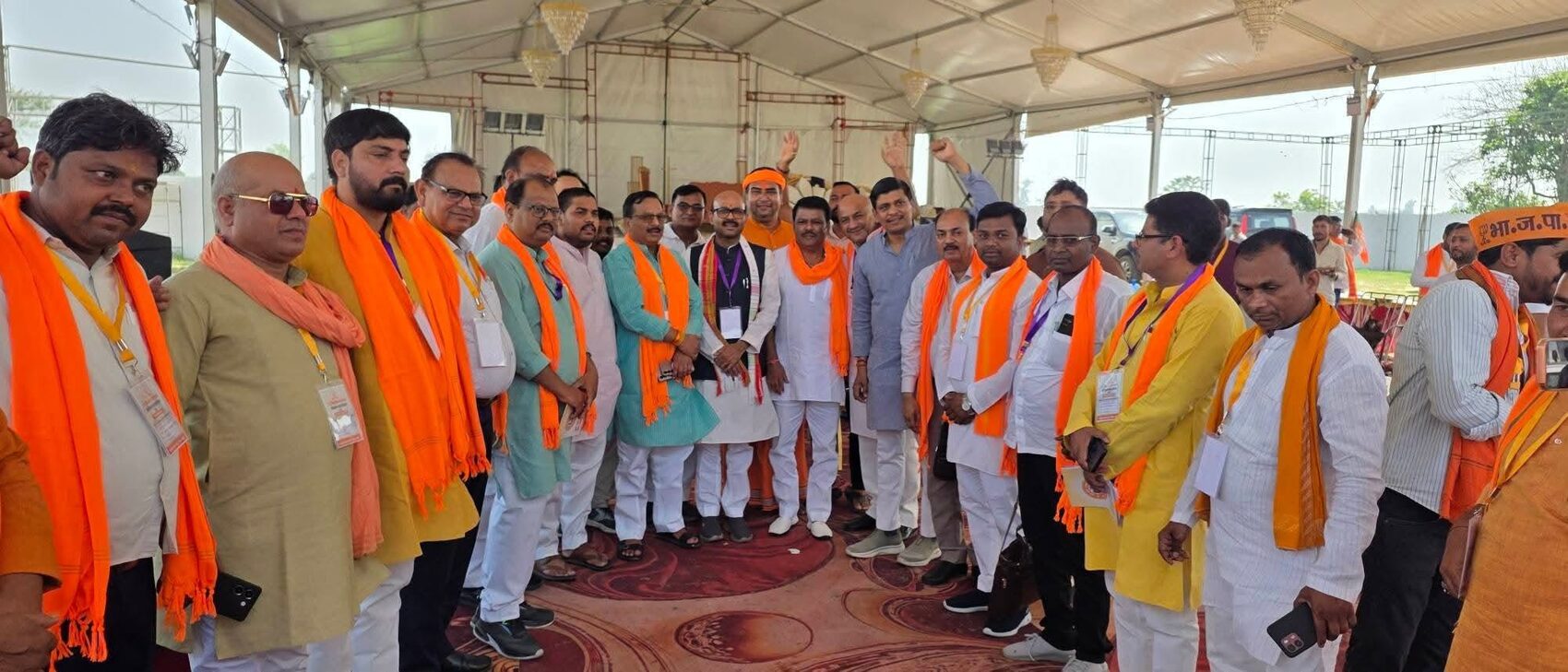
Harish Dwivedi standing among a large gathering of villagers and party workers under a marquee
A rural gathering — the setting in which water, procurement and road complaints are most often first raised.

Water & resource awareness

The river gives and
the river takes

The Ghaghara defines the southern edge of Basti district. A river of that size in a flat alluvial plain is a double fact: it underwrites the fertility that makes intensive cultivation possible, and it sets the terms of the flood season for the villages nearest to it.

The practical consequences run in both directions. Where drainage is poor, standing water destroys a standing crop and delays the next sowing. Where canals silt up and are not cleared, irrigation fails precisely in the weeks it is most needed. Where groundwater is pumped without recharge, the water table falls and the cost of lifting water rises for everyone — hitting the smallest holdings first, because they have the least capacity to deepen a bore.

A serious water agenda for a district like this is therefore not one project but a maintenance discipline: canal desilting on a published schedule, field drainage, embankment repair before the monsoon rather than after it, pond and tank restoration for recharge, and micro-irrigation where the crop and the holding size make it viable.

The rural economy

The half of the economy
that is not farming

No agricultural district can absorb all of its own workforce on the land, and Basti is no exception. Alongside farming, the district’s recorded economy includes a substantial layer of cottage and small-scale industry — the workshops, kilns and units listed opposite.

This layer is where a great deal of rural non-farm income is actually earned, and it is chronically under-served by policy: too small for industrial support, too commercial for agricultural support. Credit, dependable power, and market access beyond the district are the three constraints that matter most.

01Brassware
02Iron goods
03Carpentry
04Agricultural implements
05Brick manufacture
06Agro-products
07Footwear
08Soap
09Candles
10Pottery
11Cotton textiles
12Sugar milling

The working agenda

Five questions that
decide rural outcomes

These are framed as questions rather than as promises, because they are the points at which rural development in eastern Uttar Pradesh actually succeeds or fails.

Theme 01

How much of the crop’s value stays with the farmer?

Raising yield is the part of agricultural policy that receives most attention and delivers the least improvement in household income. A farmer who grows twenty per cent more and receives the same price at the same delay is not better off in any meaningful sense — and in a glut year is worse off.

The value question is different and harder. It is about where in the chain the crop is first weighed, graded, stored, cleaned or processed, and about who owns that step. When the first point of aggregation is a hundred kilometres away, the margin leaves the district with the truck.

  • Storage capacity close to the field, particularly cold storage for potato
  • Primary grading and processing at block level rather than at the state capital
  • Procurement payments made on a published, enforceable timeline
  • Producer organisations with enough scale to negotiate rather than accept
Theme 02

Is the water system maintained, or only built?

Irrigation infrastructure in the Gangetic plain is largely already built. Its performance depends almost entirely on maintenance — the least visible and most frequently deferred category of public works.

Desilting, drain clearance and embankment repair produce no ribbon-cutting and no photograph. They do determine whether the rabi crop receives water in February and whether a village is reachable in August. Treating maintenance as a scheduled, published obligation rather than as an emergency response is the single largest available improvement.

  • Published annual desilting and drainage schedules with completion dates
  • Pre-monsoon embankment inspection rather than post-flood repair
  • Pond and tank restoration for groundwater recharge
  • Micro-irrigation where holding size and crop make it economic
Theme 03

Does technology reach the smallholder, or only the large farm?

Agricultural technology in India has a distribution problem more than an invention problem. Soil testing, weather advisory, improved seed, market price information and mechanised implements all exist; whether they reach a farmer with two hectares in a village twenty kilometres from the block headquarters is a separate question.

Custom hiring — shared access to machinery that no smallholder could buy alone — is the mechanism most likely to work at this scale, together with advisory delivered in the local language through a channel farmers already use.

  • Soil health testing that produces an actionable recommendation, not just a card
  • Custom hiring centres for implements at village-cluster level
  • Weather and price advisory in Hindi through mobile channels
  • Demonstration plots run with farmers rather than for them
Theme 04

Can a young person build something without leaving?

Out-migration from eastern Uttar Pradesh is a structural feature of the regional economy, and it is driven less by the absence of ambition than by the absence of a first rung. A young person with a workable idea for a repair workshop, a dairy unit, a food-processing shed or a small transport business needs three things: credit that does not require collateral they do not have, power that does not fail during working hours, and a market beyond the village.

Basti already has the craft and manufacturing base — brassware, carpentry, implements, pottery, agro-products. Strengthening what exists is faster and more durable than importing an industry that has no local roots.

  • Credit designed for first-generation entrepreneurs without collateral
  • Skilling matched to the trades the district already practises
  • Reliable three-phase power for small workshops
  • Market linkage beyond the district for existing crafts
Theme 05

Will the land still be productive in thirty years?

Sustainability in an intensively farmed alluvial district is not an abstract environmental concern; it is an income question with a long delay. Continuous cereal cropping without rotation depletes soil nitrogen and organic matter. Unbalanced fertiliser use degrades structure. Groundwater extraction beyond recharge lowers the table for everyone. Each of these transfers cost from the present generation to the next.

The remedies are well known and unglamorous: rotation that includes pulses, balanced nutrient application based on actual soil tests, organic matter returned to the field rather than burned, and recharge treated as seriously as extraction. The obstacle is not knowledge but the short-term cost to a household that cannot absorb a bad season.

  • Crop rotation including pulses to restore soil nitrogen
  • Balanced nutrient use based on tested soil, not habit
  • Residue management as an alternative to burning
  • Recharge structures maintained alongside extraction

On the ground

Among the people this concerns

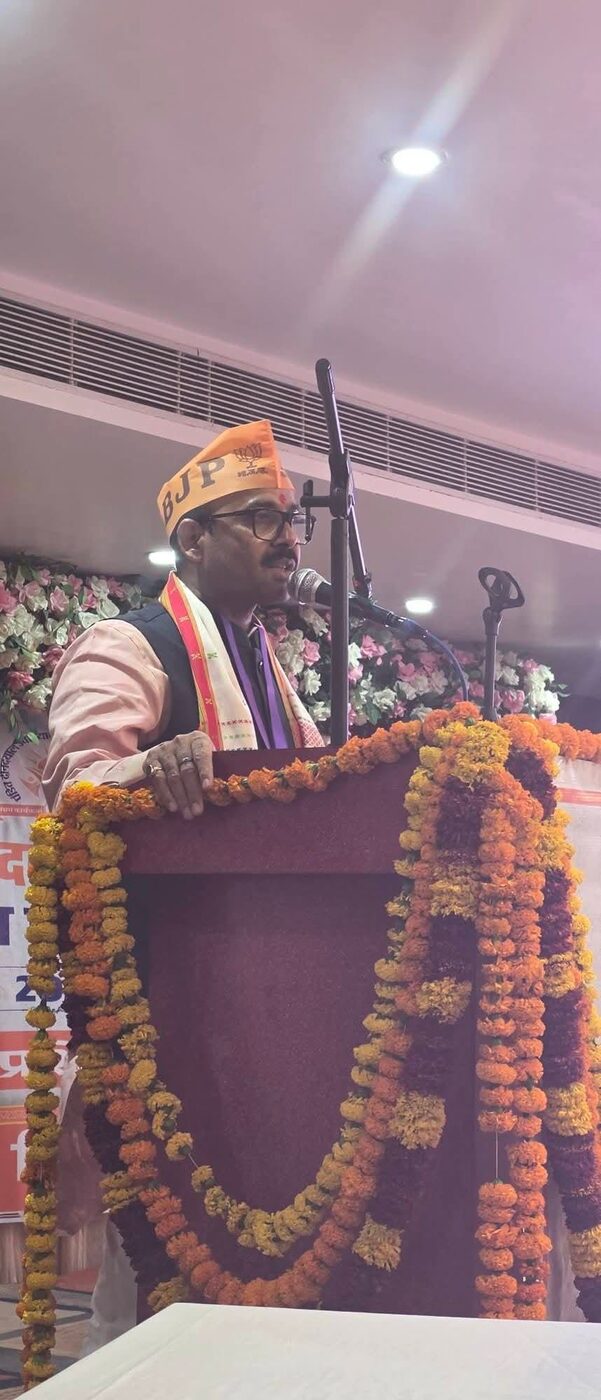
Harish Dwivedi addressing an audience from a marigold-decorated podium at a rural function
Addressing a rural function from a decorated podium.
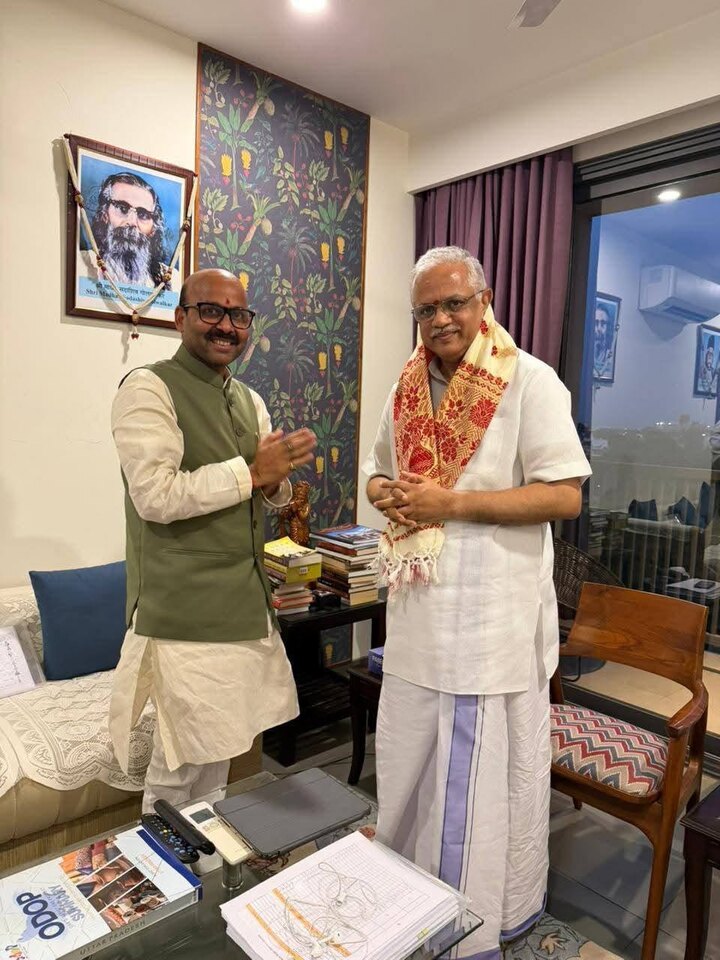
Harish Dwivedi greeting a senior citizen with folded hands during a meeting
Meeting a senior citizen. Rural representation is built on personal access, and the expectation that a representative can be reached in person.

About the information on this page

The district figures, river names, crop list and industry list on this page are drawn from the Census of India 2011 and published district records. They describe Basti district; they are not presented as personal achievements, and no agricultural project, scheme outcome or statistic is attributed to any individual here.

The five themes above are set out as analysis of what rural development in this district requires. They are stated as priorities and questions, not as completed work.

Continue

Ten priorities, set out in full

Agriculture, water, infrastructure, education, healthcare, youth and employment, enterprise, technology, environment and public participation — each with the reasoning behind it.