About

An agriculturalist from a village in Basti district who spent ten years representing that district in the Lok Sabha — and what those two facts, held together, mean for how public work gets done.

Introduction

The ground he comes from

Teliyajot is a village in Basti district, in the eastern plain of Uttar Pradesh. Harish Chandra Dwivedi was born there on 22 October 1973, to Yashoda Devi and the late Sadhu Sharan Dubey. He completed a Master of Arts in Political Science in 1998, studying at H.R.P.G. College, Khalilabad, under Deen Dayal Upadhyay Gorakhpur University. In 2006 he married Vineeta Dwivedi; they have a son, Kushagra, and a daughter, Avantika.

On the official record his occupation is entered as agriculturist. It is worth pausing on that word, because it is not decorative. In a district where the great majority of households depend directly or indirectly on the land, being an agriculturalist is a form of standing: it means the cropping calendar, the cost of diesel for a pump set, the delay in a procurement payment and the arithmetic of a small holding are not briefing-note abstractions. They are the household economy you grew up inside.

That is the perspective he carried into public life. In May 2014 he was elected to the 16th Lok Sabha from the Basti parliamentary constituency, and in 2019 he was returned to the 17th Lok Sabha from the same seat. He served continuously until 4 June 2024 — ten years, two mandates, one constituency.

What follows on this website is an account of that decade and of the ideas that shaped it. It is deliberately restrained. Where a figure is quoted it is drawn from published parliamentary or census records; where something has not been independently documented, it is not claimed.
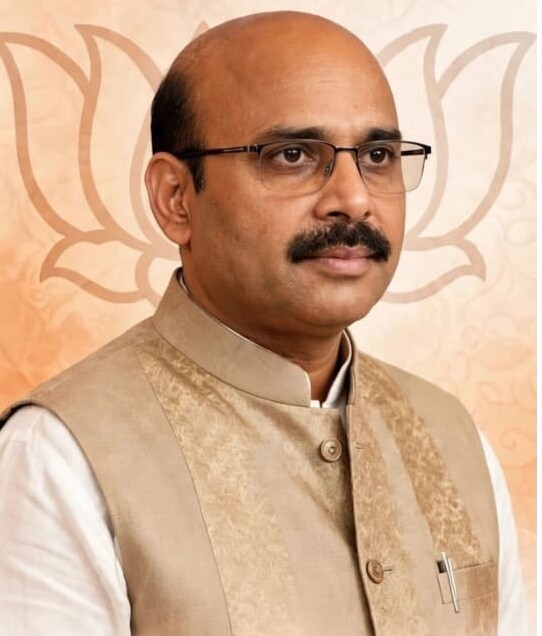
Formal portrait of Harish Dwivedi in a beige jacket against a patterned background
Harish Dwivedi Agriculturalist · Former MP

Two terms in the Lok Sabha for Basti, Uttar Pradesh — 16 May 2014 to 4 June 2024.

On the record

Personal and professional identity

Born
22 October 1973Teliyajot, Basti district, Uttar Pradesh
Education
M.A., Political Science1998 · Deen Dayal Upadhyay Gorakhpur University
Occupation
AgriculturistAs entered on the official record
Family
Vineeta DwivediMarried 2006 · one son, Kushagra; one daughter, Avantika
Constituency
Basti, Uttar PradeshFive assembly segments across Basti district
Parliamentary service
2014 – 202416th and 17th Lok Sabha, two consecutive terms

Experience and responsibility

Two terms, one constituency

Serving the same seat twice changes the nature of the work. A first term is largely spent learning the machinery: which department answers for which grievance, how a question is framed so that it cannot be deflected, which committee is the right route for a structural problem. A second term is where that knowledge compounds — and where a representative is finally judged against what was promised five years earlier.

It also changes the relationship with the electorate. People stop treating you as a candidate and start treating you as an address. Complaints arrive with the assumption that you already know the background, that you remember the last conversation, that you understand why a particular canal or a particular school has been raised three times before.

The margins were narrow in both contests — 33,562 votes in 2014 and 30,354 in 2019 — which is its own kind of instruction. A constituency that gives a close mandate is a constituency that expects to be answered to.

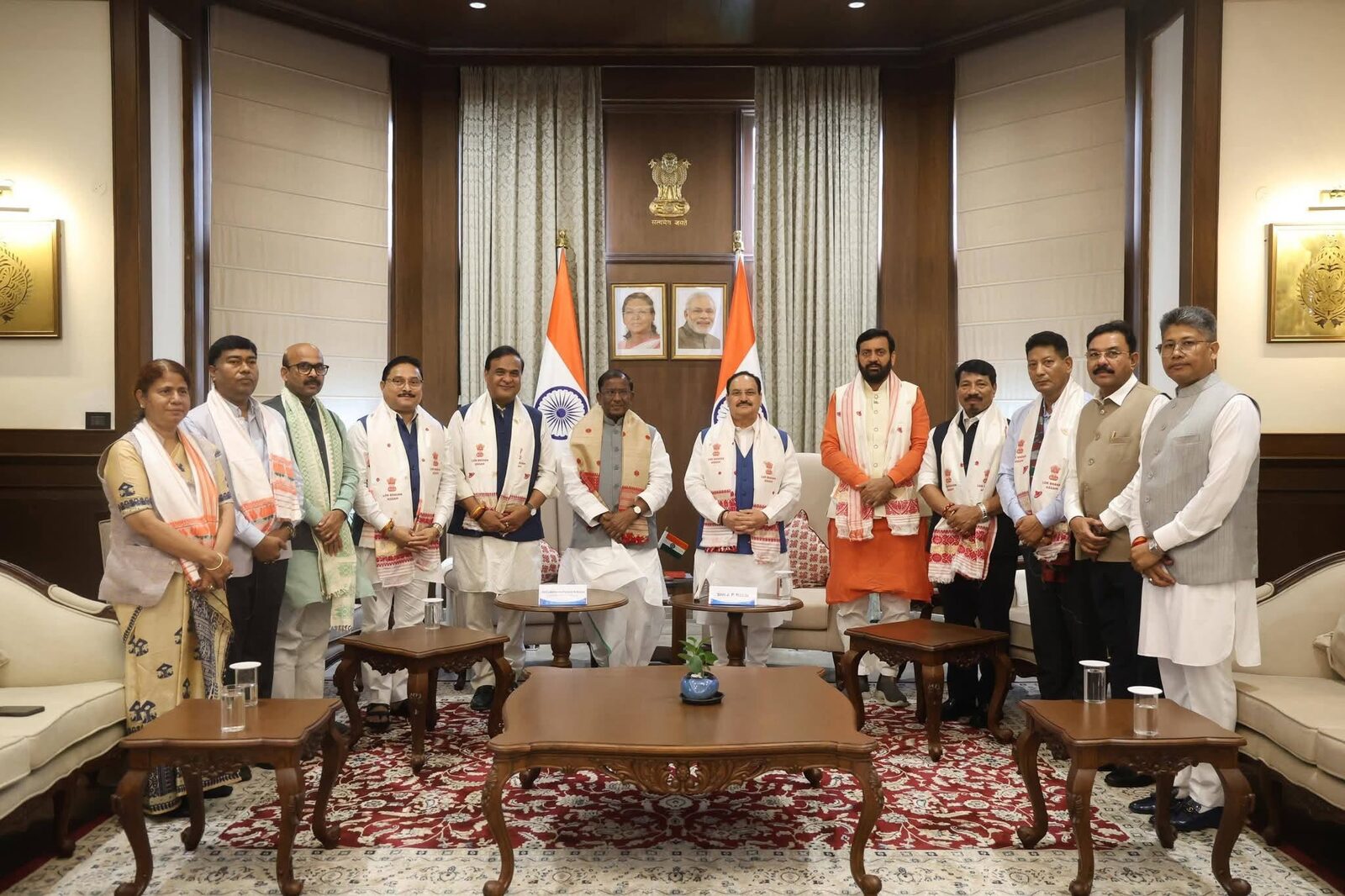
Harish Dwivedi with a delegation in a formal official reception room displaying the national flag
Institutional work — a delegation meeting in an official setting.

Leadership philosophy

Three working principles

Not a manifesto. Three habits that determine whether the office of a representative does anything useful at all.

Principle 01

Proximity before policy

Every good decision about a village begins with having stood in it. Data describes a district; it does not tell you that the approach road floods for six weeks a year, or that the sub-centre is open but has no one to staff it after four o’clock. Those facts are only available in person.

This is why constituency presence is treated here as a duty rather than as public relations. The information gathered in a courtyard is the input that makes a parliamentary question precise enough to be worth asking.

Principle 02

The unglamorous work is the work

Announcements are easy and desilting a canal is not. A great deal of rural development consists of maintenance — drains cleared, embankments repaired, transformers replaced, schools staffed — none of which produces a photograph worth circulating.

The same is true inside Parliament. Committee work is slow, technical and largely invisible, and it is where legislation is genuinely improved. Choosing that work over visibility is a deliberate trade.

Principle 03

Account for the failures too

A public record that only lists successes is not a record; it is advertising. Attendance figures, question counts and debate participation are published by Parliament precisely so that citizens can measure their representative — including where the numbers are unflattering.

On this website those figures appear as recorded, alongside the national and state averages against which they should be read. Confidence in public institutions is built by people who are willing to publish the whole number.

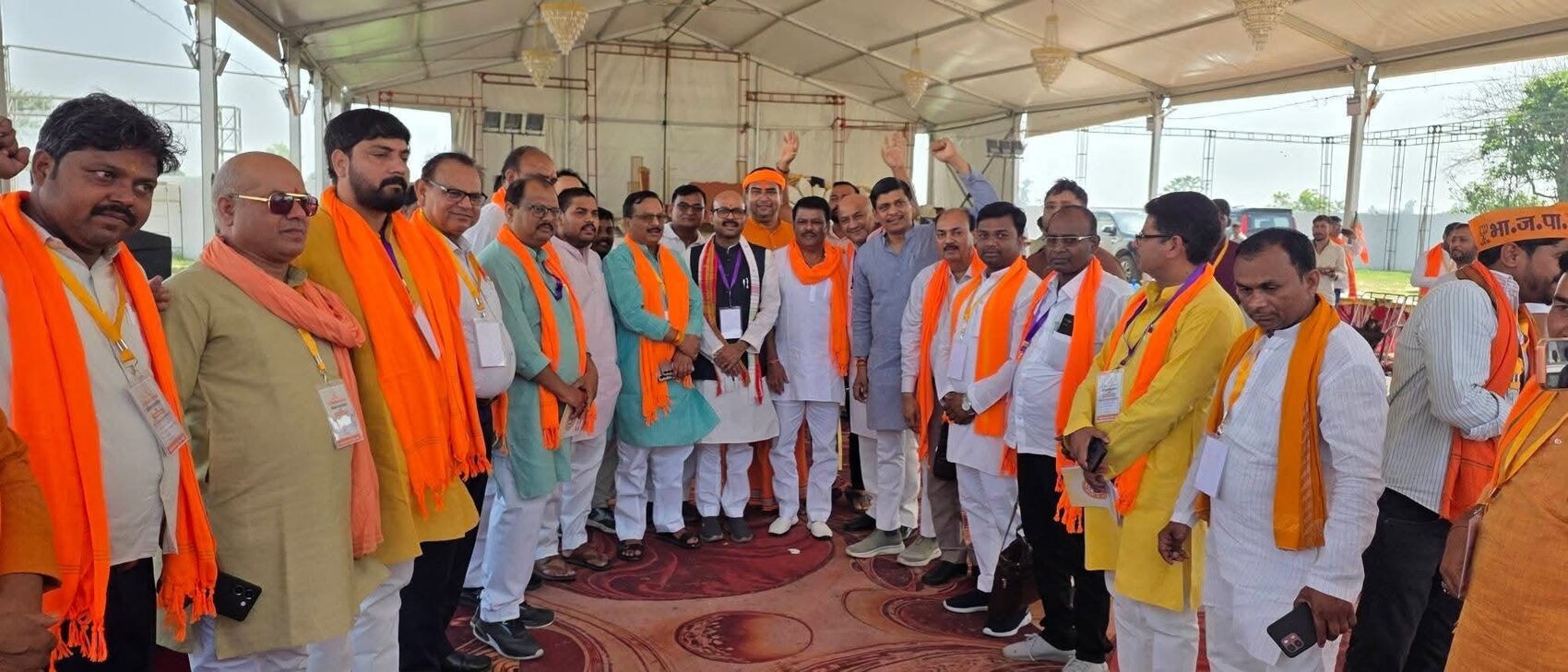
Harish Dwivedi standing with a large gathering of party workers and supporters under a marquee

Connection with communities

A district of 2.46 million people

Basti district recorded a population of 2,464,464 at the 2011 Census, across 2,688 square kilometres, at a density of 917 people per square kilometre, with a literacy rate of 67.22% and a sex ratio of 963 women to every 1,000 men. Those five numbers describe the scale, the pressure on land, and the two social indicators that any development agenda for the district has to move.

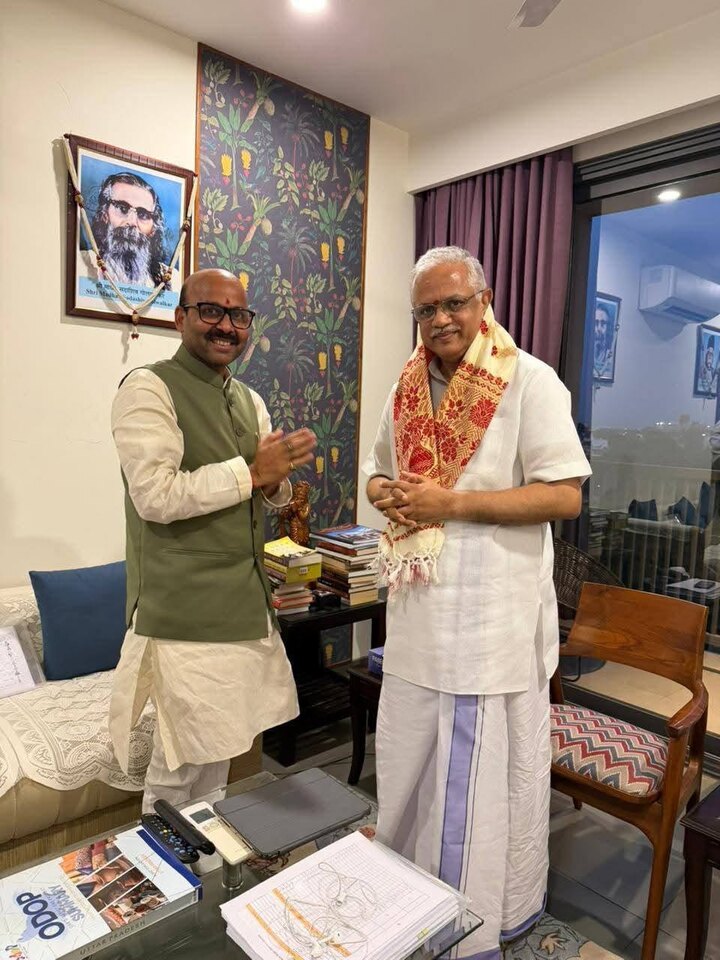
Harish Dwivedi greeting a senior citizen with folded hands during a meeting
Greeting a senior citizen. Access in person is what most rural constituents actually have; an office address is not.

Community connection in a district of this size cannot be maintained through offices alone. It is sustained through the ordinary occasions of rural public life — village meetings, temple and school functions, farmers’ gatherings, condolences, weddings, the opening of a road. These are the settings in which a representative is actually accessible to people who would never travel to a district headquarters to lodge a complaint.

They are also where the composition of a constituency becomes real rather than statistical. A seat is made up of five assembly segments — Harraiya, Kaptanganj, Rudhauli, Basti Sadar and Mahadewa — each with its own cropping mix, its own infrastructure gaps and its own history of neglect. Treating them as interchangeable is the most common failure of rural planning.

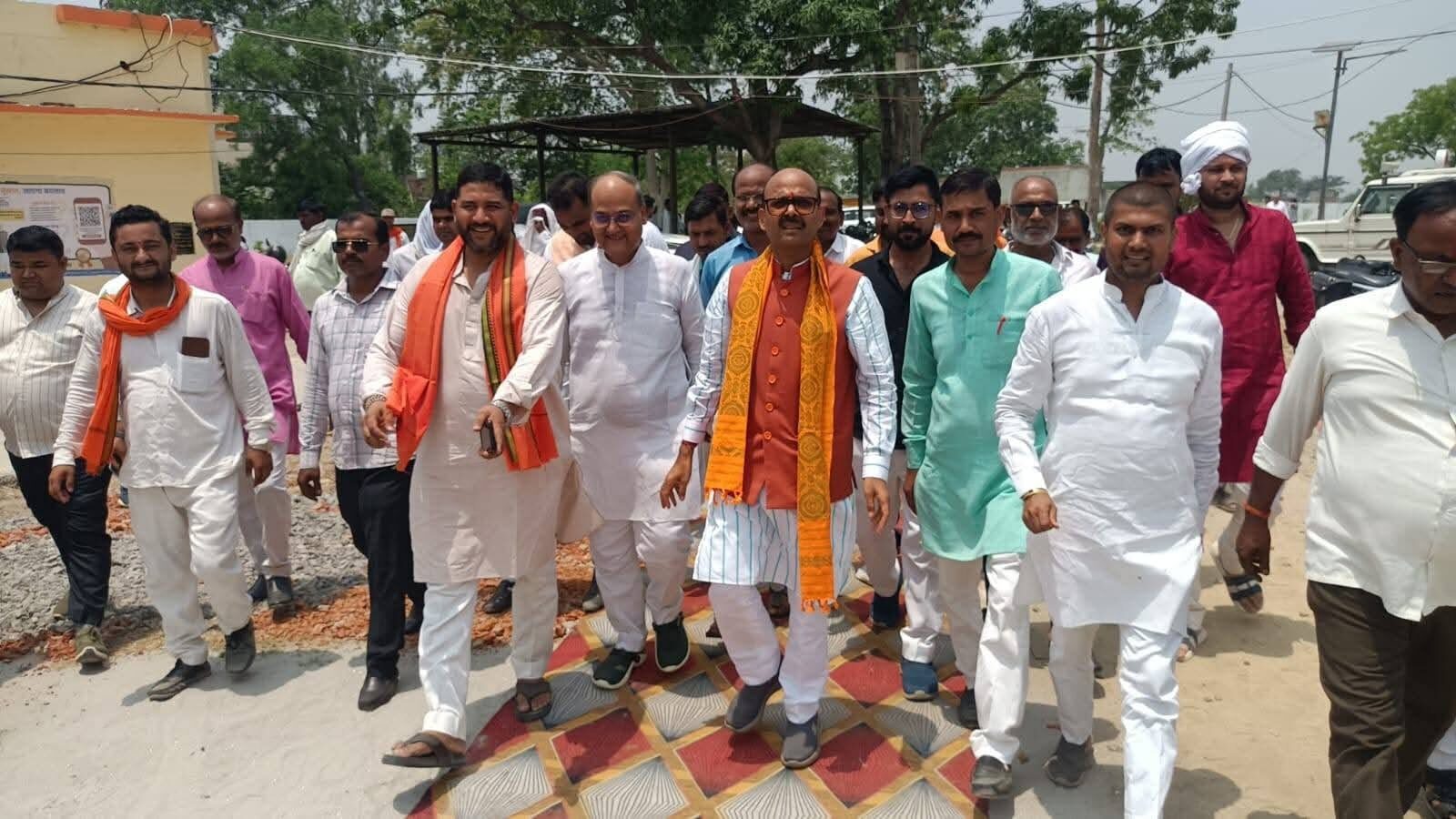
Harish Dwivedi walking along a village road accompanied by residents and local representatives
A constituency visit in the Basti countryside.

Development outlook

What development has to
mean in a rural district

Basti was identified in 2006 as one of the districts eligible for support under the Backward Regions Grant Fund programme. That designation is often read as a verdict. It is better read as a description of starting conditions — a district with high population density, small holdings, a literacy rate below the national figure, and an economy still built on the same crop cycle and the same cottage trades it has had for generations.

Under those conditions, development is not a matter of importing a model. It is a matter of removing specific frictions in a specific order: water before yield, road before market, school retention before skilling, credit before enterprise. Sequencing is the whole discipline. Doing the fourth thing before the first produces announcements without outcomes.

It also means paying attention to the layer of the rural economy that policy usually ignores. Basti’s brassware, carpentry, agricultural-implement workshops, brick kilns, potteries and agro-processing units employ people who cannot be absorbed by farming alone. Strengthening that layer — through credit, power, and access to markets beyond the district — is how a rural economy stops exporting its young people.

Continue

The documented journey — year by year

Early background, education, entry into public life, both parliamentary terms, committee service and organisational responsibilities, set out as a dated timeline.